Showing posts with label the Beacon Center. Show all posts

Tuesday, January 16, 2024

Polling Results from The Beacon Center


For more polling results, follow this link

Stumble Upon Toolbar
My Zimbio
Top Stories

Thursday, December 21, 2023

Metro Settles Claim, pays Nashville Rescue Mission and others $214K reimbursement for forcing public sidewalk construction.

by Rod Williams, Dec. 21, 2023- At this past Tuesday's Council meeting, the Metro Council passed aresolution settling the claims of the Nashville Rescue Mission and several others in an amount totaling of $213,966.13. The claim arose out of Nashville's sidewalk ordinance which forced property owners to build public sidewalks in front of their property when they substantially remodeled or developed their property. That policy, thanks to a lawsuit brought by The Beacon Center of Nashville, was ruled unconstitutional.  Nashville Rescue Mission got the largest reimbursement in the amount of $80,134.06. Metro Legal recommended the city settle the claims. 

Nashville Rescue Mission is the local agency doing more to serve the homeless than any other agency in town. It describes itself like this: Nashville Rescue Mission is a Christ-centered community committed to helping those who are hungry, hurting, and experiencing homelessness by providing programs and services that focus on a person’s entire life—physical, mental, spiritual, emotional, and social. Our goal is to restore the whole person through a Christian approach that helps someone experiencing homelessness or struggling with addiction learn how God loves them and gain the biblical insight they need to lead a productive life.

Nashville Rescue Mission is good stewards of the money they receive, and they get no government funding. Nashville Rescue Mission serves close to 1,600 meals a day to those who are hungry, hurting, and experiencing homelessness in the community. This includes three hot meals a day, 365 days a year. They house an average of 800 men, women, and children each night.  

$80,134.06 will buy a lot of hot meals. 

If you are someone you know were forced to build a sidewalk, you may be eligible for reimbursement. To file for reimbursement, follow this link

If you are feeling charitable this holiday season, I can think of no organization more deserving of support than the Nashville Rescue Mission. 

Stumble Upon Toolbar
My Zimbio
Top Stories

Friday, December 17, 2021

2021 Pork Report: Exhaust Smoked Ham with Nashville-Hot Honey Glaze. A Tax Dollar Grab through Outdated Emissions Testing


Stumble Upon Toolbar
My Zimbio
Top Stories

Tuesday, December 05, 2017

lij Shaw and Pat Raynor fight back against Metro Government's effort to put them out of business


Shaw and Raynor vs. the Metropolitan Government of Nashville and Davidson County

The Beacon Center, December 5, 2017 -Who would have thought it would be illegal to make music in Nashville? Unfortunately, the city’s ban on home-based businesses means local musicians, hairstylists and other aspiring entrepreneurs face steep fines and potential imprisonment if any customers physically come to their homes to do business. Nashville residents Lij Shaw and Pat Raynor have both lived this nightmare.
 
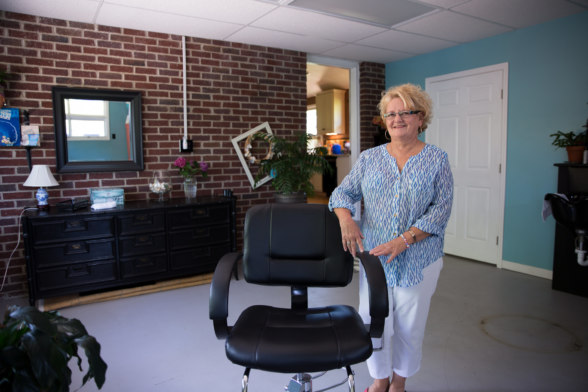
Lij operates a successful recording studio in his home, while Pat undertook an expensive renovation to her home to open up a hair salon that met all of Tennessee’s health and safety standards. Both Lij and Pat ran their businesses for some time without any trouble. Then one day, the city government threatened to fine and take them to court unless they shut down their home-based businesses.
This ban has done real damage to their ability to earn an honest living. Lij has lost significant revenue since being ordered by a city officer to stop publishing his address in advertisements for his business. Meanwhile, Pat has been forced to rent a costly and inconvenient commercial studio just to keep her hairstyling practice in business.

Home-based businesses have been a common and legitimate use of property for entrepreneurship for centuries. They cost less to get off the ground, they promote healthy work-life balance, and they create jobs that otherwise might not exist. Anyone who has taken a piano lesson in their teacher’s home or sent their child to daycare in a neighbor’s home has been a client in a home-based business.
Even Nashville’s government knows it would be outrageous (and impossible) to find and destroy every home-based business in the city, so it enforces its client prohibition with an unwritten don’t-ask-don’t-tell policy. Rather than reform this unfair law, the city solicits anonymous complaints on its website, turning neighbor against neighbor and shutting down home-based businesses without any evidence of harm to anyone.

Most Nashville home-based business owners never get in trouble for violating the client prohibition. Many aren’t even aware of it. But the ban can be as disastrous as a lightning strike for the unlucky few who get caught. Those local entrepreneurs, like Pat and Lij, find their very livelihoods threatened.

This arbitrary law has nothing to do with regulating traffic or noise in residential neighborhoods. The city zoning code allows home-based daycares and short-term rentals to serve up to 12 clients a day on the property. People who live in historic homes are also allowed to use their homes for special events such as wedding receptions and catering dinners up to several times a week.

Lij’s and Pat’s outlawed home-based businesses are as neighborhood-friendly as the businesses Nashville already permits. There’s no good reason for Nashville to shut them down, so Lij and Pat are fighting back. They’ve teamed up with the Institute for Justice and the Beacon Center of Tennessee to vindicate their constitutional right to use their home to earn an honest living.

Home-Based Businesses: Finding the American Dream at Home
Home-based businesses offer people an accessible path to entrepreneurship. There are many reasons people aspire to start a business. Perhaps they want to be the next Mary Kay or Steve Jobs, who famously launched the multi-billion dollar company that is now Apple from his garage. Perhaps they are tired of the 9-to-5 and want to be their own boss. Or perhaps they want to fill a need in their community and earn an honest living doing it. Whether their dreams are modest or ambitious, starting a business out of their homes can make it more cost-effective for would-be entrepreneurs to succeed.
Opening a brick-and-mortar business can cost thousands of dollars more, depending on industry and location. In Nashville, for example, rents for office and retail space are at an all-time high—around $23 per square foot for office space and $25 per square foot for retail space—making it difficult for small and independent businesses to thrive. And that’s on top of other costs necessary to open a business, including acquiring all of the necessary permits, insuring the business and hiring employees. These high startup costs can prevent people with great business ideas from ever pursuing them. That’s bad for everybody.

Home-based businesses, however, allow an entrepreneur to figure out what works and what doesn’t before taking on the expense of commercial space. One study found that most needed less than $25,000 to get going—a sum many business owners can pull together from personal savings or loans from family and friends. Particularly in lean economic times, the low cost of starting a home-based business can significantly reduce the risks inherent to starting a business.

Additionally, some small businesses just make more sense in the context of the home, particularly those operated by only one person. An overwhelming 60 percent of home-based businesses are run by people who work by themselves. For an individual who just wants to personally offer tutoring, tax preparation or music lessons, it likely will never make sense—or be financially viable—to obtain commercial space.

Nashville’s Home Occupation Law
Nashville, Tennessee is a booming city with a diverse economy. World-renowned for its thriving music scene, the city bills itself as “Music City, U.S.A.,” but many of its roughly 685,000 residents also find work in the healthcare, publishing, banking, and transportation industries. Many others—the focus of this lawsuit—work from home.

The Institute for Justice analyzed Nashville’s business records and found at least 1,600 home-based businesses operating within the limits of Nashville’s consolidated city-county jurisdiction. These businesses provide a valuable contribution to Nashville’s economy, and to their proprietors, they provide a livelihood.

Unfortunately, many of them are illegal. A provision contained in Nashville’s residential zoning ordinance prohibits any so-called “home occupations” from serving clients on the property. This home-business client prohibition was added to the city’s zoning code in 1998 without public debate or any record of why the law exists.

The Nashville government evidently has some misgivings about this prohibition because it maintains a don’t-ask-don’t-tell enforcement policy toward enforcement. The local Department of Codes and Building Safety, known as “Codes,” investigates home-based businesses only when somebody complains.

“It’s not something you could drive by and notice,” explained Codes Assistant Director Bill Penn to a columnist for The Tennesseean in 2015. “It’s something neighbors would have to turn in.”
Nashville also doesn’t seem to want its home-business ban to apply as broadly as it does because Nashville allows at least three kinds of home-based businesses that serve clients: day care homes, owner-occupied short term rentals, and historic home events. Those businesses are allowed to serve 12 clients per day in most cases.

Amazingly, the home-business law’s defenders even boast about how well Nashville’s illicit home-based businesses fare under this enforcement scheme. “I’ve got tons of small businesses in my neighborhood, and nobody’s complaining about them,” said Nashville Councilman Carter Todd, explaining his ‘no’ vote on a 2011 bill that would have legalized home-based businesses. “I’ve got—down the street, there’s a tutor. Farther down the street, there’s a woman that teaches swim lessons. All these things technically may be against the law, but they don’t bother anybody, nobody complains about it, and [the don’t-ask-don’t-tell policy] works.”

But that’s simply wrong. Neither Pat Raynor’s nor Lij Shaw’s home-based business could be seen or heard from the street, but Codes ordered them to shut down anyway, accusing them of no violation other than simply having a business.

In December 2016, Lij and Pat applied to the city to rezone their homes to allow Lij’s home recording studio and Pat’s hair salon to serve a limited number of clients. 

Their neighbors turned out overwhelmingly in support, presenting the Nashville Metro Council with petitions bearing the signatures of 39 and 44 of their neighbors, respectively. But it was not enough for the government. Several months and public hearings later, their applications were denied. Lij and Pat are left with no options other than to sue for their right to work from home.


Lij Shaw
Elijah “Lij” Shaw, a single father and lifelong record producer, moved to Nashville in 1991. He has recorded nationally renowned, Grammy Award-winning performers such as John Oates, Jack White, Wilco, Adele, and the Zac Brown Band. He’s been living in the same house in East Nashville since he bought it in 2000. When his daughter Sarayah was born in 2005, he was inspired to take charge of his work life and find a way to better support his family. So he invested thousands of dollars to convert his detached garage into The Toy Box Studio: a professionally soundproofed recording studio where he could record his musician clients on his own property, all while remaining close to Sarayah as she grew up.
It was a perfect setup. Well-respected musicians use The Toy Box Studio—the 2015 Grammy winner for Best Roots Gospel Album was mixed there—and Lij operated for 10 years without incident. His soundproofed studio can’t be seen or heard from the street, and his clients park in his driveway. None of his neighbors have ever complained to him about traffic or noise.

But now Nashville is threatening to destroy Lij’s investment and uproot him from his neighborhood. In September 2015, Lij opened his mailbox to a letter from the Nashville government ordering him to cease and desist the operation of his home recording studio. A month later, an officer from the Nashville Codes Department called and ordered him to shut down his business or be taken to court. Lij was able to ward off an inspection by agreeing to take his address down from his website, but the officer warned that if Codes ever caught him recording in his studio—or even podcasting—he would be taken to court and shut down.


Pat Raynor
Pat Raynor, a lifelong hairstylist, became interested in working from home after her husband Harold passed away in 2009. His 10-year battle with a debilitating medical condition left Pat with extensive medical bills, exacerbated by the loss of Harold’s income. Pat, who values hard work and cherishes her independence, resolved to do whatever it took to stay in the home she and Harold had bought together in 1999.

Pat still pays the mortgage and property tax on that home. Those are fixed costs, and Pat must work in order to afford them. But working comes with costs of its own. As a sole proprietor, Pat pays both income tax and self-employment tax to the federal government. She is 66 and must drive to and from work, which has become moderately hazardous for her in the dark and sometimes icy winter months. Renting a commercial hair salon costs $135 per week, no matter how much she makes. She realized that she could eliminate the costs of commuting and renting by moving her business into her home.

Tennessee state law allows home salons, and Pat invested over $10,000 to renovate her home and obtain a Residential Shop license from the Tennessee State Board of Cosmetology. She opened for business on April 24, 2013. Pat is friends with most of her neighbors and counts many of them among her clients. It was easy for those neighbors to get to her house, and because Pat only works by appointment and didn’t put a sign out front, she wasn’t generating traffic from curious walk-ins the way a downtown barbershop might have. With no commercial rent and no commute, this arrangement was safe, comfortable and affordable—a perfect way for Pat to keep working in her “youthful old age.”

Alas, Pat’s home-based hair salon was short-lived. On November 26, 2013, Nashville sent her a cease-and-desist letter, ordering her to shut down her home-based business. Pat called the city’s Codes Department—which wouldn’t tell her who had complained—and learned that her state shop license was no protection against Nashville’s client prohibition. She was told to clear out her salon and schedule an inspection. After the city no-showed the first two times it told Pat to have her home ready, it sent three agents to verify that she was in compliance. They warned her never to cut hair in her home studio again, or she would be taken to court.

Legal Claims
Residential zoning laws are a relatively modern creation. They restrict property rights by their very nature, and the U.S. Supreme Court did not clear them as constitutional until 1926. In Village of Euclid v. Ambler Realty Co., the Court held that municipal governments, if allowed under state law, could exclude industrial uses from municipally-defined residential zones. But whatever an industrial use may be, it’s clearly not Lij’s or Pat’s quiet, by-appointment-only home studios. As originally authorized by the Supreme Court, zoning laws were not meant to tell people how to behave inside their homes.

Since 1926, however, zoning laws have grown far more intrusive in scope. In 1974, the Supreme Court held that a New York college town could use its residential zoning laws to prohibit unrelated graduate students from signing a lease together as housemates. Together with a follow-up case holding that zoning laws could not be used to prohibit grandparents from living with their grandchildren, the Belle Terre decision remains the Supreme Court’s last statement on the constitutionality of zoning laws. As a result, municipal governments today believe themselves free to abuse the zoning power to regulate or prohibit almost anything they want, even if doing so has no plausible connection to a legitimate government interest like health or public safety.

That is what has happened in Nashville. Lij and Pat are law-abiding citizens who have the overwhelming support of their neighbors, no criminal record, and a safe and unintrusive home-based business–far less intrusive than the many home-based businesses the city allows. It’s unfair of Nashville to single Lij and Pat out.

Nashville’s home-business law is “dishonest,” according to Metro Councilwoman Burkley Allen at a February 2017 Planning Commission hearing on Lij and Pat’s SP applications. City officials know that home-based businesses are everywhere, yet they adhere to a don’t-ask-don’t-tell enforcement policy that admits law-abiding Nashvillians are better off lying to the government about their home-based businesses.

Furthermore, residential zoning laws cannot be used to regulate a home-based business that can’t be seen or heard from the street. Residential zoning laws are meant to maintain the character of residential neighborhoods—not tell residents how to behave inside their homes. The Tennessee Constitution, which affords greater protection for substantive due process than its federal counterpart, prohibits such an intrusive regulation of someone’s use of her own home. The government could never prohibit Lij or Pat from having a friend over for a visit. It doesn’t make sense that the government could prohibit them from having customers over.

The Institute for Justice and the Beacon Center have teamed up to affirm Lij and Pat’s right to work from home. Their victory in court will expand legal protections for property rights, recognize meaningful limits on the zoning power, and vindicate the right of all Tennesseans to earn an honest living in their homes.

My Comment: I support the right of Lij Shaw and Pat Raynor to continue to earn a living by operating thir non-intrusive businesses out of their home. We all know of people who operate a business out of their home. Most do not get caught. When one routinely engages in activity that is technically illegal but the authorities just look the other way, that is not rule of law. That makes the authorities "the law" rather than the enforcer of law.  I support the work of the Beacon Center in fighting for justice for people like Lij Shaw and Pat Raynor.  To make a financial contribution to The Beacon Center, follow this link.

Stumble Upon Toolbar
My Zimbio
Top Stories

Wednesday, November 29, 2017

Beacon Center Announces Launch of Advocacy Organization

The Beacon Center, November 29, 2017 - Today, the Beacon Center of Tennessee announced the formation of Beacon Impact, a new 501(c)(4) organization that will serve as the think tank’s advocacy partner. 
 
Justin Owen, who will serve as CEO of both organizations, issued the following statement: “The Beacon Center has a solid track record of developing policy solutions grounded in the principles of free markets, individual liberty, and limited government. We have also successfully shepherded many of these solutions into law. But it’s not enough. We need the ability to advocate for meaningful reform both inside and outside the state Capitol, in the halls of the legislature and local governments, and also on the ground in our communities. Beacon Impact will be our strategic partner to turn our ideas into action at all levels.”


John Cerasuolo, chairman of both the Beacon Center and Beacon Impact noted, “We are tremendously proud of what the Beacon Center has been able to accomplish with a small staff, especially with such stringent limits on our ability to advocate for the policies we have formulated and that we know will make Tennessee freer and more prosperous. With the launch of Beacon Impact, we can now have an even larger imprint on the future of our great state.” 

A nonprofit 501(c)(3), the Beacon Center has never engaged in election-related activity or advocated for any particular political party or candidate, but instead has become a trusted independent, nonpartisan voice for free market ideas. Similarly, while allowed by law as a 501(c)(4), Beacon Impact will not endorse or oppose specific candidates for office, instead focusing exclusively on advocating for the policy ideas developed by the Beacon Center. In tandem, these two organizations will be the strongest independent voice for free markets, individual liberty, and limited government the state has ever seen.

Stumble Upon Toolbar
My Zimbio
Top Stories

Monday, November 20, 2017

The Bastiat Society meets Thursday, November 30th, 6PM

To Register follow this link


Stumble Upon Toolbar
My Zimbio
Top Stories

Tuesday, August 08, 2017

The Bastiat Society meets Aug 10th. Presents "Rigged: The Injustice of Corporate Welfare.'


The Bastiat Society will present the Beacon Center of Tennessee's first ever documentary at our August meeting. Come watch the 20 minute film, Rigged: The Injustice of Corporate Welfare, and learn how the practice of corporate welfare hurts our state's small and local businesses.

In the film, you will hear from two Memphis furniture store owners and discover the difficulties they faced when a large competitor was given a vast sum of money by the government to open up down the road. After the screening, the Beacon Center's President & CEO Justin Owen will host a discussion on the topic of corporate welfare in our state.

6:00 pm Happy Hour & Networking

6:30 pm Rigged: The Injustice of Corporate Welfare

7:00 pm Discussion with Beacon Center President & CEO Justin Owen on Corporate Welfare in Tennessee

Events are free but please register here!
http://events.r20.constantcontact.com/register/event?oeidk=a07eeerwlz3567997a0&llr=cgtfsbcab

Stumble Upon Toolbar
My Zimbio
Top Stories

Friday, April 14, 2017

What Homesharing Means to Me

Reposted from The Beacon Center:

Alece Ronzino

“I moved to Nashville in 2011 after launching and leading a nonprofit in South Africa for 13 years. I’ve continued my work in the nonprofit sector by providing consulting services to grassroots organizations. In 2013, I purchased my first home in East Nashville and began renting out my guest rooms on Airbnb to supplement my income. If it weren’t for my Airbnb business, I would be hard-pressed to continue my work with developing nonprofits that are doing great work with small budgets. I am thankful to live in a city that has an innovative entrepreneurial culture, enabling me to restart my life, serve nonprofits, earn a living, and support other local businesses.” 
 Rachel and P.J. Anderson

“My husband is a Christian singer-songwriter who frequently tours for his work. Since I am a graphic designer, my job enables me to travel with my husband along with our young children. It’s important for us that our young family is able to spend as much time together as possible. We rent out our home on Airbnb while we travel, enabling us to keep our family together and cover all of our expenses. It just seems unfair that Nashville decision makers are siding with the big hotel chains over small families like us who are just trying to achieve work-life balance.”


Shan Canfield

“My husband and I purchased the home next door to our own and opened an Airbnb to help us retire on time. This was a huge opportunity for us to get ahead financially, but it also allowed us to invest in the lives of people from all around the world. We have loved operating this business and sharing our lives with individuals and families whose paths we’d otherwise never have crossed. To us, Airbnb has meant financial security, the ability to invest in our community, and sharing our lives. We’re so grateful for what this business has brought to our lives.”

Bailey Neal

“I own and operate a business called Nestive that services 135 short-term rentals in the state. My business employs 24 full and part-time people making upwards of $15/hour who clean, perform maintenance, and provide upkeep on homes being used as short-term rental properties. I am passionate about ensuring that visitors to Nashville enjoy a quality experience in the city and truly experience our community. Operating this business allows me to positively impact the lives of so many of my fellow citizens from those I employ, to the Airbnb hosts and their guests that we serve, to the numerous shop and restaurant owners our guests visit while in town.” 


Stumble Upon Toolbar
My Zimbio
Top Stories

Saturday, December 17, 2016

Beacon Issues Second Warning to Nashville Metro Council

BY BRADEN H. BOUCEK, The Beacon Center, December 8, 2016  -Today, we, along with Southeastern Legal Foundation, wrote the Nashville council for a second time regarding their affordable housing mandates. If this is the first you have heard of the issue, an affordable housing mandate forces developers of residences to use a complicated formula set by the city to sell their homes at below-market prices. In other words, the city is forcing people to lose money on something they sell. All of this is just to address an alleged crisis in affordable housing that does not exist.

This is price control, pure and simple. It is unnecessary. It does more harm than good. It does nothing to address the larger problem even in the best of cases. And even if none of this was true, forcing a property owner to lose money on homes that they build makes as much sense as addressing hunger by making a grocer lose money on the produce they sell.

We have written this second letter in the hopes that Nashville will fix the law. The law is illegal and unconstitutional for the reasons we explain at length in the letter. So ultimately Nashville will be forced to fix the law after ordered by a court. Responsible lawmaking can avoid this. We are happy to help.

There’s a particular reason to revisit the law. It was only supposed to be about residential apartment units. Everyone involved believed this to be true. Yet, buried in the law is an easily overlooked loophole that demands that “all proposed residential developments” who trigger the law “shall comply.” Nashville officials have told concerned parties to ignore that “shall” because the law is not supposed to impose the same obligations on residential units. The plain language says different. If this is a mistake, Nashville should fix it.

For us, litigation is a last resort. But when cities are willfully indifferent to the rights of others and won’t change even when warned, there is no choice. Litigation, however unfortunate, is sometimes necessary. It is all too easy for lawmakers to figure people will just bend instead of spending the time and money to protect their constitutional rights (which is why public interest litigation is so important). They may be right in most cases. This is not how a constitutional republic is supposed to work.

We hope for the responsible consideration of Nashville lawmakers.
You can read the full text of the second letter here.

My Comment: I am immensely pleased with the work of the Beacon Center. They are one of the organizations I financially support.  I appreciate their successful efforts to combat Nashville government's progressive agenda and defend our constitutional rights. To learn more about The Beacon Center, to get on their mailing list,  or make a contribution, follow this link

Stumble Upon Toolbar
My Zimbio
Top Stories

Saturday, October 22, 2016

Metro's Airbnb law unconstitutional!

Metro's unconstitutional law regulating Short Term Rental Properties was struck down today. Circuit Judge Kelvin Jones ruled that because of the laws vagueness there is no way an ordinary person could understand the statute. The challenge to the law was filed by The Beacon Center of Tennessee, representing P.J. and Rachel Anderson who argued the law infringed on their rights as homeowners. The Anderson's own a home in Salemtown. 

Mr. Anderson is a traveling musician and Ms Anderson is a graphic artist. Both are often out of town at the same time so they started renting their home on AirBnB about ten nights a month. That was not problem.  Then, opportunities presented itself for the Anderson's to relocate to Chicago where they would live most of the time but be in Nashville about ten days a month.  They planned to simply expand the number of nights they rented their Nashville home on AirBnB to about twenty.  That was not permitted under the Metro AirBnB ordinance. Represented by The Beacon Center they filed a lawsuit and won.  The city is appealing. To read more about the issue, see this story in the Tennessean: Judge: Metro's Airbnb law unconstitutional.

The Beacon Center is one of the organizations I support with my charitable giving. I am very pleased with this victory. Here is The Beacon Center press release: 

 BREAKING: Beacon Wins Airbnb Lawsuit Against City of Nashville!

Just hours ago, the Beacon Center scored a huge victory when we won the very first lawsuit filed by our Legal Foundation. The judge ruled that the city of Nashville's Airbnb law is unconstitutional. This lawsuit, challenging Airbnb regulations, was the first of its kind anywhere in the nation.
We filed the suit last year on behalf of Nashville homeowners P.J. and Rachel Anderson
We are ecstatic about today's ruling by Judge Kelvin Jones. It was a huge victory for homeowners in Nashville and across the state. Not only does the ruling prove that the Nashville City Council completely disregarded the state Constitution when it passed this law, it also sends a loud and clear message to cities across the state when it comes to restricting homeowners' rights in the new economy.
This is an enormous first victory for the Beacon Legal Foundation. Today's ruling shows that we will be a force to be reckoned with as we continue to protect the rights of all Tennesseans against overreaching state and local governments.
Today was a great day for the Anderson family, the Beacon Legal Foundation, homeowners, and most importantly the Constitution.
You can read an article about the victory featured in the Tennessean here.

Stumble Upon Toolbar
My Zimbio
Top Stories

Sunday, September 25, 2016

Conservatives tackle justice reform in Tennessee and politics makes strange bedfellows.

by Stacey Barchenger, The Tennessean - Is criminal justice reform a conservative issue? A group of thinkers, politicians, advocates and political donors gathered in Nashville Tuesday to answer that question with a resounding yes.

The conversation over wine and hors d'oeuvres at Nashville's Union Station Hotel turned to topics ranging from curbing court fees that prevent people from obtaining driver's licenses, thus capturing people in a cycle of repeat offenses and poverty, to providing jobs for people who are released from prison. Panelists also showed support for decriminalizing minor, non-violent offenses as a way to cut down the state's prison population.

"It's important that conservatives understand the reality of our criminal justice system," said Justin Owen, president and CEO of conservative thinktank the Beacon Center of Tennessee. "We want conservatives to understand what we've been doing for the past 30 years isn't working." (link)

Unlikely coalition tackles criminal justice reform in Tennessee

by Anita Wadhwani and Joel Ebert, The Tennessean, Sept. 20, 2016 -An unlikely coalition of Nashville businesses, social service and advocacy groups is launching an effort to reform criminal justice in Tennessee, where the incarceration rate is 11 percent higher than the national average.

Through the newly formed Tennessee Coalition for Sensible Justice, backers plan to pursue legislation initially focused on juvenile justice, lowering the rates of people returning to prison and changing sentencing guidelines for those convicted of crimes.

The coalition includes the American Civil Liberties Union, the Tennessee Association of Goodwills, the Nashville Area Chamber of Commerce and the Beacon Center of Tennessee, which advocates for smaller government.

"It's not about being tough or soft on crime, it's about being effective on crime," said Justin Owen, president and CEO of the Beacon Center of Tennessee.

My comment: I do not hold my opinions because I am a conservative but I am a conservative because I hold my opinions. I don't reject a policy position because it may be considered a liberal position.

I have for a long time had what some may call a "liberal" position on several issues.  Probably the most long-held and obvious of these is that I favor marijuana reform. I think it is nuts that we criminalize people for smoking a relatively harmless substance.  I have been an advocate of marijuana reform since the mid-seventies when I joined NORMAL.

Overtime, I have also come to think that there must be something terribly wrong with the American system of criminal justice which has one of the highest imprisonment rates of any free country in the world. I have come to think that the "tough  on crime" policies of Republicans may have been a mistake.

Also, liberals have been in the forefront of fighting for open government, open meetings, open records and transparency. I support those efforts that let citizen know what their government is up to. If this is a "liberal" position, then so be it.

My other "liberal" positions are not so much specific policy position as just a mind set that embraces defiance of convention and authority. I tend to think a little disrespect for the law is a healthy thing. I also tend to think that victimless crimes should not be crimes. I also don't like laws which ban strip clubs and I would not want to live in a community that banned liquor by the drink or wine in grocery stores. There is a certain segment of the religious right that makes me uncomfortable. I basically think people should be free to be deviants if they want to. I also think that on occasion the American Civil Liberties Union actually does defend our liberties.  I wish they were more balanced in whose liberties they defend but I often see their point of view.

A couple of years ago I attended a convention of CPAC (Conservative Political Action Committee). There is nothing comparable on the left. Thousands of people from all across the country attend a three day convention to be inspired, motivated, challenged, and educated. Part of the CPAC experience is the exhibition hall where a couple hundred or more of exhibitors promote there product, publication, cause, or point of view. In 2013 I was pleasantly surprised to see probably a dozen organization promoting either drug policy reform or criminal justice reform.

I am a supporter of The Beacon Center and am pleased to see this organization has joining the cause of criminal justice reform.  This is one of those issues that regardless of ones political label, one should get behind simply because it is the right thing to do.

Stumble Upon Toolbar
My Zimbio
Top Stories

Monday, June 27, 2016

State Loses Hearing, Shampoo Case Will Move Forward

Press release, NASHVILLE – In a major decision, the Beacon Center's lawsuit against the state of

Tammy Pritchard fights for right to earn
to earn a living washing hair

Tennessee's shampooing law will move forward. Last month, Beacon sued the Board of Cosmetology for its law requiring a license to wash hair. The state tried to get the case dismissed, saying there are "public safety issues" and that "favoring certain groups on economic grounds" is just politics, but the judge disagreed.

In denying the state's request to throw out the suit, Chancellor Carol McCoy stated that she has never heard of any safety issues with shampooing. She went on to note that our client deserves to have her day in court.

Beacon's client Tammy Pritchard was ecstatic. She exclaimed, "Down in my soul, I am so happy. I am truly overwhelmed at this ruling."

Beacon Director of Litigation Braden Boucek added, "I am very pleased with this result, it is a great day for freedom in Tennessee. We are one step closer to restoring the constitutional right to earn a living for Tennesseans like Tammy."

Stumble Upon Toolbar
My Zimbio
Top Stories

Monday, May 09, 2016

Shampooing Hair Without A License Could Mean Jail Time In Tennessee

Tammy Pritchard
by Nick Sibilla, Forbes, May 5, 2016 -  When Tammy Pritchard was a young mother, shampooing
hair provided much-needed income and even helped put her through college. Today, this part-time police officer wants to wash hair at a beauty salon operated by her friend in Tennessee.

Unfortunately for Tammy, unlicensed shampooing is a crime, punishable by up to six months in jail. Before she can legally wash hair at a salon, Tammy must finish 300 hours of training on “the practice and theory of shampooing.” In a course more fitting for Greendale Community College, prospective shampooers learn about the “chemistry and composition of shampoos and conditioners,”
“shampooing and rinsing foreign material from hair,” and “shop management,” which covers remedial skills like “answering phone, scheduling appointments, ordering supplies.” After completing the class, shampooers then have to pass two exams, one on “theory,” the other practical, to obtain their license.

One school that previously taught the course charged $3,225 for tuition, books, kit, uniform and other fees. (link)

Stumble Upon Toolbar
My Zimbio
Top Stories

Wednesday, June 17, 2015

New State Logo Wins 'Pork of the Year' award from Beacon Center

Press Release, The Beacon Center - This year, for the first time in Beacon history, we let the public decide which instance of government waste should be named the Pork of the Year, and after hundreds of votes in an online poll, we have a winner!

 It was a close matchup but in the end, the new $46,000 Tennessee logo debacle took the high honors, barely edging out the $165 million taxpayer handout to Volkswagen by a vote of 47% to 39%. A local government official's taxpayer-funded trip to Disney World came in a distant third with 14%. To read a little bit more about the nominees, you can click here.

Beacon Communications Director Mark Cunningham stated, "While there were many deserving candidates for Pork of the Year, there was none more deserving than the Tennessee logo fiasco.  Although our team has absolutely no graphic design experience, it took us an entire minute and 45 seconds in Mac Paintbrush to create the same design for our Pork Report."

The full 2015 Pork Report, which remains Beacon's most famous annual publication, will be released in mid-July.

Stumble Upon Toolbar
My Zimbio
Top Stories

Sunday, May 24, 2015

The Tennessean examines The Beacon Center

The Tennessean had almost a page and a half devoted to the work of the Beacon Center in today's paper. The story told the history of the organization, where their funding comes from, profiled Justin Owens, the CEO of Beacon and explained some of the organizations positions on issues, and their successes and why they succeed. It was not a hatchet job. I thought it was a very fair representation.

While I disagreed with Beacon on the issue of Insure Tennessee, concluding that with the safe guards in place, and the threat to rural hospitals if it did not pass, and some other factors, I, nevertheless, understand the arguments against it. While I disagreed with Beacon on this one issue, I am usually in agreement and think they have done a great job advancing a pro free market, less government, and greater personal freedom agenda.  They are one of the organizations I financially support.

With The Tennessean now protecting their content behind a paywall, you can not read the Tennessean online unless you subscribe. However, if you are not a Tennessean subscriber I think you  still can get a certain number of free articles.  Below is a video and some excerpts from the story and this is link to the news article. (Update: I found the video that starts automatically very annoying and after unsuccessfully trying to insert code to disable that feature, I just deleted the video.)

"Six full-time employees, a million dollars and an argument. The main ingredients in the recipe used by the Beacon Center of Tennessee to kill Insure Tennessee aren't complex."

"The Beacon Center's past Tennessee successes include tort reform, a cap on the amount of money that can be awarded for "pain and suffering" in lawsuits — although that was recently deemed unconstitutional by a Hamilton County judge — and repealing the state's tax on inheritance, or what the center and other critics call the "death tax."'

"Those successes, and advocacy on issues like school vouchers, helped the center gain attention and money from the general public, Owen said."

"Civil forfeiture — the practice of law enforcement confiscating property before a conviction — is a big issue for the center. But Democrats are more likely to champion removing that policing power than Republicans. So Owen and the center are working with the ACLU of Tennessee and its Executive Director Hedy Weinberg."

'"I think that piques the curiosity of legislators," Weinberg said, of the ACLU and Beacon Center working together."


Stumble Upon Toolbar
My Zimbio
Top Stories

Thursday, February 19, 2015

Beacon Releases New Website for Tennessee Taxpayers: MySchoolSpending.org.

NASHVILLE - Today, the Beacon Center of Tennessee released a website that gives taxpayers across the state an opportunity to see how their tax dollars are spent on education. MySchoolSpending.org is a customizable tool that allows Tennesseans to look into how their specific school district spends money. By typing in their ZIP Code, or choosing a local school district with a drop down menu, taxpayers can determine whether their investment is being spent wisely.

Some of the statistics taxpayers can see for each school district include total spending per child, percentage of money spent in the classroom, and the growth in administrative costs. For instance, taxpayers spend $9.3 billion each year on education statewide. Of that amount, just 53 percent makes it into the classroom.

Beacon CEO Justin Owen noted, "This is a great tool for parents and taxpayers alike to see how their tax dollars are actually spent when it comes to education. Overall, we have found that many school districts are spending excessive amounts of money on administrative costs instead of on each child's actual education. We believe that by exposing how school districts spend money, people will be more open to parental choice options that could result in a more efficient use of taxpayer money along with better results for our children."

You can visit MySchoolSpending.org and see how your district spends taxpayer money by clicking here.

Stumble Upon Toolbar
My Zimbio
Top Stories

Wednesday, February 04, 2015

Beacon Center's statement on the Success in the Fight Against Medicaid Expansion

 Offers Real Healthcare Solutions for Low-Income Tenneseans

Press Release, The Beacon Center - The Beacon Center applauds legislators for rejecting a Medicaid expansion in Tennessee. Instead of supporting this extension of Obamacare in our state, lawmakers stood with the Beacon Center and fought for what was right, choosing taxpayers over special interest groups.

While the Beacon Center disagreed with Governor Haslam's plan, we do want to thank him for bringing an important issue to light and trying to come up with a unique Tennessee solution to this issue. We also believe those who supported "Insure Tennessee" had the best of intentions, and we look forward to working with them in the coming months to find a responsible, cost-effective, free market solution that will truly benefit low-income Tennesseans.

"While stopping the expansion of Medicaid under Obamacare was a necessary first step, it is still our responsibility as Tennesseans to find affordable healthcare solutions for our most vulnerable neighbors," said Beacon CEO Justin Owen.

To that end, Beacon is calling for passage of right-to-try legislation that would allow terminally ill patients to access potentially life-saving medicine. Beacon will also work with state leaders to expand access to charity care, reduce the costs imposed by health insurance mandates, and allow Tennesseans to purchase health insurance across state lines.

"There are many things we can do to make healthcare and health insurance more affordable and accessible for all Tennesseans," said Lindsay Boyd, Beacon Director of Policy. "We look forward to rolling up our sleeves and getting to work helping those most in need."

Stumble Upon Toolbar
My Zimbio
Top Stories

Friday, October 24, 2014

Beacon Center of Tennessee supports Amendment 2. Good enough for Jefferson, good enough for me

Good enough for Jefferson, good enough for me

Justin Owen
By: Justin Owen, CEO The Beacon Center - I’m proud to be part of the effort to fix the constitutional quagmire over how we select appellate and Supreme Court judges in Tennessee.

Through the years, Tennessee’s judicial selection process added a nominating panel, predominantly composed of lawyers and insiders. This panel would nominate three candidates to send to the governor, who then selected one of the three to serve on the bench. All this despite our Constitution stating that “judges should be elected by the qualified voters.”

While the Beacon Center of Tennessee and others have taken this matter to court in the past, judges have consistently upheld this so-called Tennessee Plan as constitutional, ignoring the plain language of the Constitution.

So we can either defer to those incorrect rulings, or we can improve the system by taking it to the voters themselves with a constitutional amendment. Amendment 2, which will be on the ballot in November, rightly puts the issue in the hands of voters.

With Amendment 2, Tennessee voters can adopt a method almost identical to that crafted by our founders for selecting federal judges. Like the federal model, the governor we elect will nominate the most qualified people as judges, and then our elected legislature will vote to confirm or reject their appointment. Unlike the federal system, there will be no lifetime tenure for judges under Amendment 2.

This approach strikes a great balance between making sure we have judicial independence to uphold the rule of law, while holding judges accountable to the people and our elected representatives.

The great Thomas Jefferson, who helped craft the federal system for selecting judges, had but one criticism of it: lifetime tenure. “If a member of the Executive or Legislature does wrong, the day is never far distant when the people will remove him. They will see then and amend the error in our Constitution which makes any branch independent of the nation,” Jefferson said of lifetime appointments for judges.

In a tip of the hat to Jefferson, Amendment 2 will not only preserve the balance between judicial independence and accountability, it will also offer voters a chance to remove judges at the polls. If voters dislike a judge’s rulings, they can vote against their governor, senator and representative who put the judge there. And ultimately, and most importantly, Amendment 2 protects the right of Tennesseans to keep or fire the judges at the end of their terms at the ballot box.

I’ll be voting “Yes on 2” in November because it is the best approach to choosing competent, fair and impartial judges, while holding them accountable to the people of our state.

If it was good enough for Jefferson, it’s good enough for me.

This op-ed appeared in The Tennessean on Sept. 2, 2014. I am reposting this from the Beacon Center website. Vote Yes on Amendment 2. Rod

Stumble Upon Toolbar
My Zimbio
Top Stories

Tuesday, September 09, 2014

Beacon Offers Responsible Plan for Repealing the Hall Income Tax

Seniors, entrepreneurs, and the middle class are hurt the most by the Income Tax

NASHVILLE, (Press Release)  – The Beacon Center of Tennessee just released a brand new reform package to make Tennessee income tax-free once and for all.

This proposal provides meaningful and necessary tax relief to our state's seniors and job creators. It will not only help the people who currently pay the tax, but will also allow cities and counties around the state to be more competitive in attracting businesses and residents alike. 

The proposal suggests adopting a six year phase out, in which the rate of the current six percent tax would be reduced by one percent each year until it is eliminated entirely. 

“Many people are under the wrong impression that repealing the Hall Income Tax will only help the rich,” said Beacon CEO Justin Owen. "Our analysis shows that over 40 percent of the people who currently pay the Hall Income Tax make under $75,000 a year. This tax is disproportionately hurting the middle class and seniors.

Owen went on to say, "Our plan is a win-win. It is both gradual and responsible, and will help Tennesseans while not harming local governments."


Stumble Upon Toolbar
My Zimbio
Top Stories

Tuesday, December 17, 2013

Law enforcement agencies receive a lump of coal for abusive practices

“Policing for profit” draws Tennesseans’ ire in Beacon Center’s annual poll 

NASHVILLE – The Beacon Center of Tennessee today announced that Tennesseans have overwhelmingly chosen the 23rd Judicial District, and Cheatham, Dickson, and Humphreys Counties as the recipients of the 2013 Lump of Coal Award.

The Beacon Center awards this dubious distinction annually to the person or group in Tennessee who, more than any other during the past year, acted as a Grinch to Tennesseans by bah-humbugging the principles of liberty and limited government.

The judicial district and three counties have become infamous for their use of a controversial tactic known as “policing for profit.” Abusing the state’s civil forfeiture laws, the agencies have begun seizing cash, vehicles, and other personal items in traffic stops, forcing the property owner to prove that the cash or property was not related to criminal activity. Innocent victims often spend months attempting to recoup seized property, sometimes to no avail.

An in-depth documentary by Nashville’s NewsChannel 5 revealed troubling facts about the practice, such as substantially more traffic stops on westbound Interstate lanes—where cash proceeds from drug sales frequently flow—while drugs traveling in the eastbound lanes were reportedly allowed to pass unfettered. Officers were also caught on camera admitting that they had little evidence that property was associated with a crime before seizing it anyway.

After the Beacon Center narrowed the list of offenders down to four finalists, the recipient of the Lump of Coal Award was chosen directly by Tennesseans in an online poll. The four law enforcement agencies received the most votes for the not-so-coveted prize, beating out Metro Nashville Public Schools, the Department of Labor & Workforce Development, and Hemlock Semiconductor with 40 percent of the vote.

"Tennesseans have sent a clear message that ‘policing for profit’ will not be tolerated," said Beacon CEO Justin Owen. "This practice turns the Constitution on its head, and it’s time for lawmakers to heed the outcry of law-abiding citizens who want their property rights protected from this abuse, while still preserving the authority of law enforcement to target criminals."

State legislators have indicated that they will study this issue and offer possible reforms to the state’s civil forfeiture laws when they reconvene next month. Earlier this year, the Beacon Center published a policy brief on the practice, which can be found at http://www.beacontn.org/2013/03/the-perils-of-policing-for-profit/.

The Beacon Center of Tennessee’s mission is to change lives through public policy by advancing the principles of free markets, individual liberty, and limited government.


Stumble Upon Toolbar
My Zimbio
Top Stories