by Rod Williams, Nov. 11, 2025- Six days ago, Bill Gates, co-founder of the software company Microsoft, one of the world's wealthiest men, and a leading philanthropist, published an essay, Three tough truths about climate. In the essay, he makes these points:
- Climate change is serious, but we’ve made great progress. We need to keep backing the breakthroughs that will help the world reach zero emissions.
- But we can’t cut funding for health and development—programs that help people stay resilient in the face of climate change—to do it.
- It’s time to put human welfare at the center of our climate strategies, which includes reducing the Green Premium to zero and improving agriculture and health in poor countries.
That’s well above the 1.5°C goal that countries committed to at the Paris COP in 2015. In fact, between now and 2040, we are going to fall far short of the world’s climate goals. One reason is that the world’s demand for energy is going up—more than doubling by 2050.
From the standpoint of improving lives, using more energy is a good thing, because it’s so closely correlated with economic growth. This chart shows countries’ energy use and their income. More energy use is a key part of prosperity.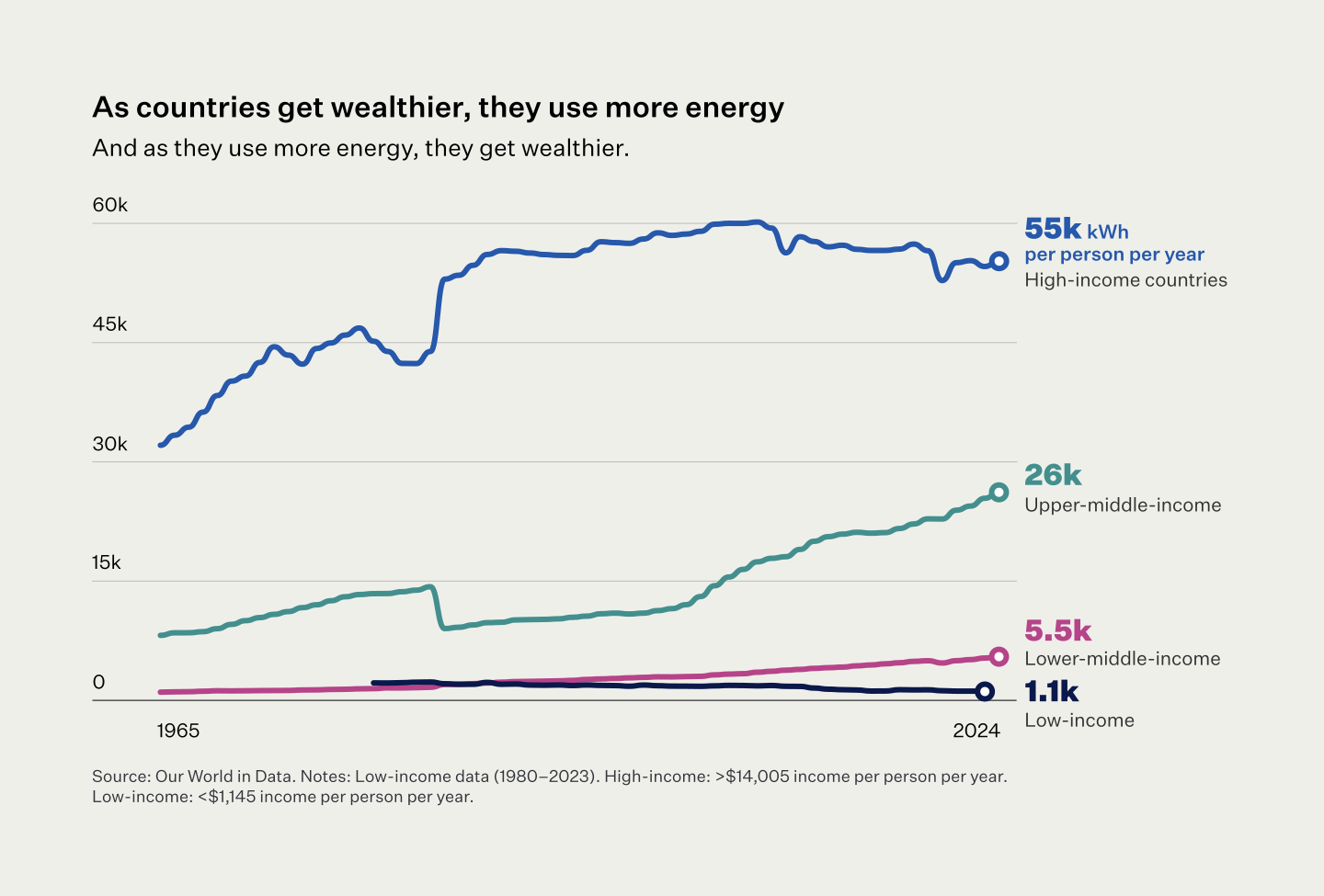
Unfortunately, in this case, what’s good for prosperity is bad for the environment. Although wind and solar have gotten cheaper and better, we don’t yet have all the tools we need to meet the growing demand for energy without increasing carbon emissions.
But we will have the tools we need if we focus on innovation. With the right investments and policies in place, over the next ten years we will have new affordable zero-carbon technologies ready to roll out at scale. Add in the impact of the tools we already have, and by the middle of this century emissions will be lower and the gap between poor countries and rich countries will be greatly reduced.
I wasn’t sure this would be possible when Breakthrough Energy was started in 2015 after the Paris agreement. Since then, the progress of Breakthrough companies and others and the acceleration now being provided by the use of artificial intelligence have made me confident that these advances will be ready to scale.
All countries will be able to construct buildings with low-carbon cement and steel. Almost all new cars will be electric. Farms will be more productive and less destructive, using fertilizer created without generating any emissions. Power grids will deliver clean electricity reliably, and energy costs will go down.
Even with these innovations, though, the cumulative emissions will cause warming and many people will be affected. We’ll see what you might call latitude creep: In North America, for instance, Iowa will start to feel more like Texas. Texas will start to feel more like northern Mexico. Although there will be climate migration, most people in countries near the equator won’t be able to relocate—they will experience more heat waves, stronger storms, and bigger fires. Some outdoor work will need to pause during the hottest hours of the day, and governments will have to invest in cooling centers and better early warning systems for extreme heat and weather events.
Every time governments rebuild, whether it’s homes in Los Angeles or highways in Delhi, they’ll have to build smarter: fire-resistant materials, rooftop sprinklers, better land management to keep flames from spreading, and infrastructure designed to withstand harsh winds and heavy rainfall. It won’t be cheap, but it will be possible in most cases. Unfortunately, this capacity to adapt is not evenly distributed, a subject I will return to below.
So why am I optimistic that innovation will curb climate change? For one thing, because it already has.
You probably know about improvements like better electric vehicles, dramatically cheaper solar and wind power, and batteries to store electricity from renewables. What you may not be aware of is the large impact these advances are having on emissions.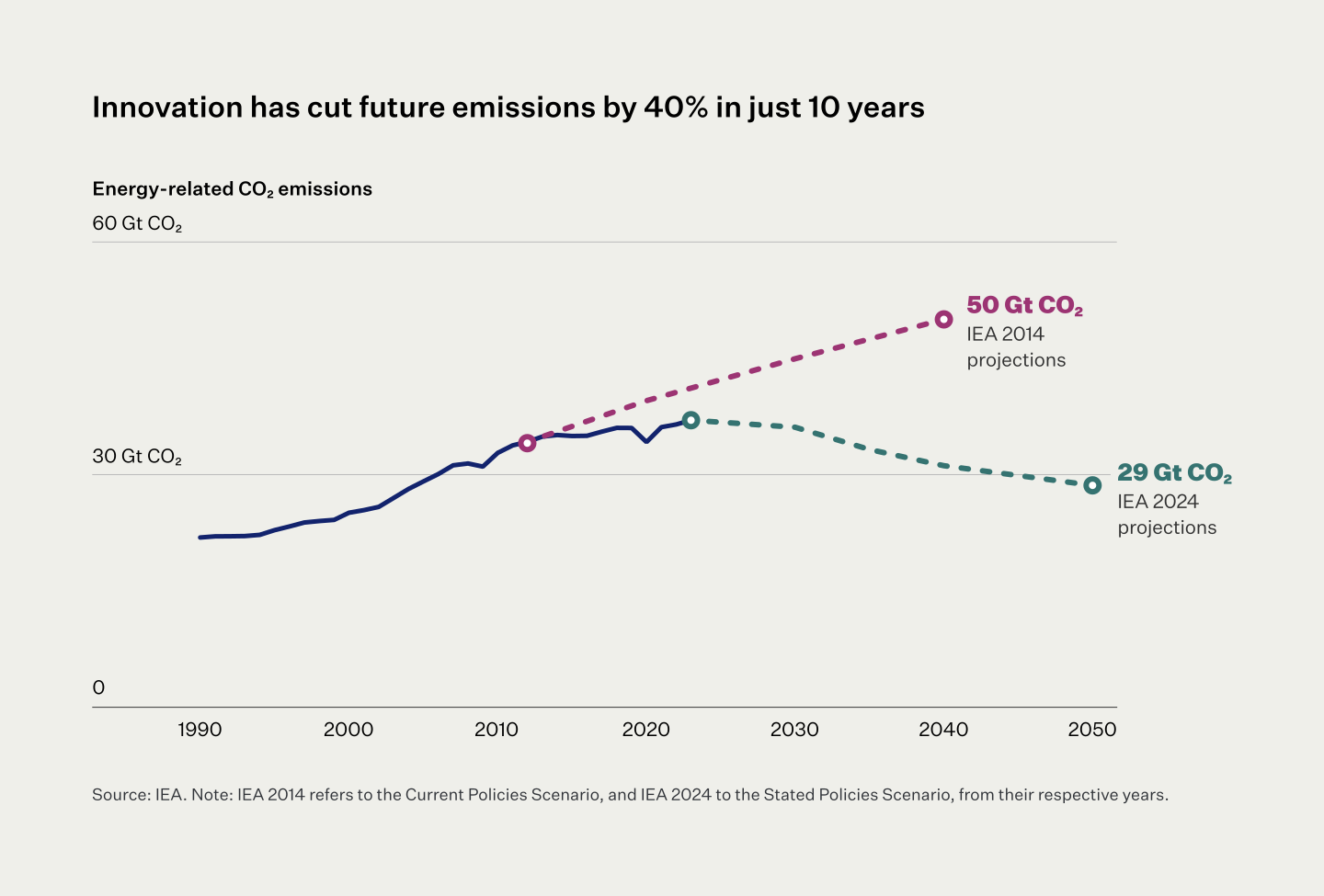
Ten years ago, the International Energy Agency predicted that by 2040, the world would be emitting 50 billion tons of carbon dioxide every year. Now, just a decade later, the IEA’s forecast has dropped to 30 billion, and it’s projecting that 2050 emissions will be even lower.
Read that again: In the past 10 years, we’ve cut projected emissions by more than 40 percent.
This progress is not part of the prevailing view of climate change, but it should be. What made it possible is that the Green Premium—the cost difference between clean and dirty ways of doing something—reached zero or became negative for solar, wind, power storage, and electric vehicles. By and large, they are just as cheap as, or even cheaper than, their fossil fuel counterparts.
Of course, to get to net zero, we need more breakthroughs. This will become even more important if new evidence shows that climate change will be much worse than what the current generation of climate models predicts, because we will need to lower the Green Premium faster and accelerate the transition to a zero-emission economy.
Luckily, humans’ ability to invent is better than it has ever been.
Breakthrough Energy focuses its new investment on the areas of innovation that still have large positive Green Premiums. Below I write about the state of play in the five sectors of the economy that are responsible for all carbon emissions. I’ll cover highlights and challenges—one common theme will be the difficulty of scaling rapidly—and I’ll include some of the companies Breakthrough Energy works with so you can see how much activity there is in each sector.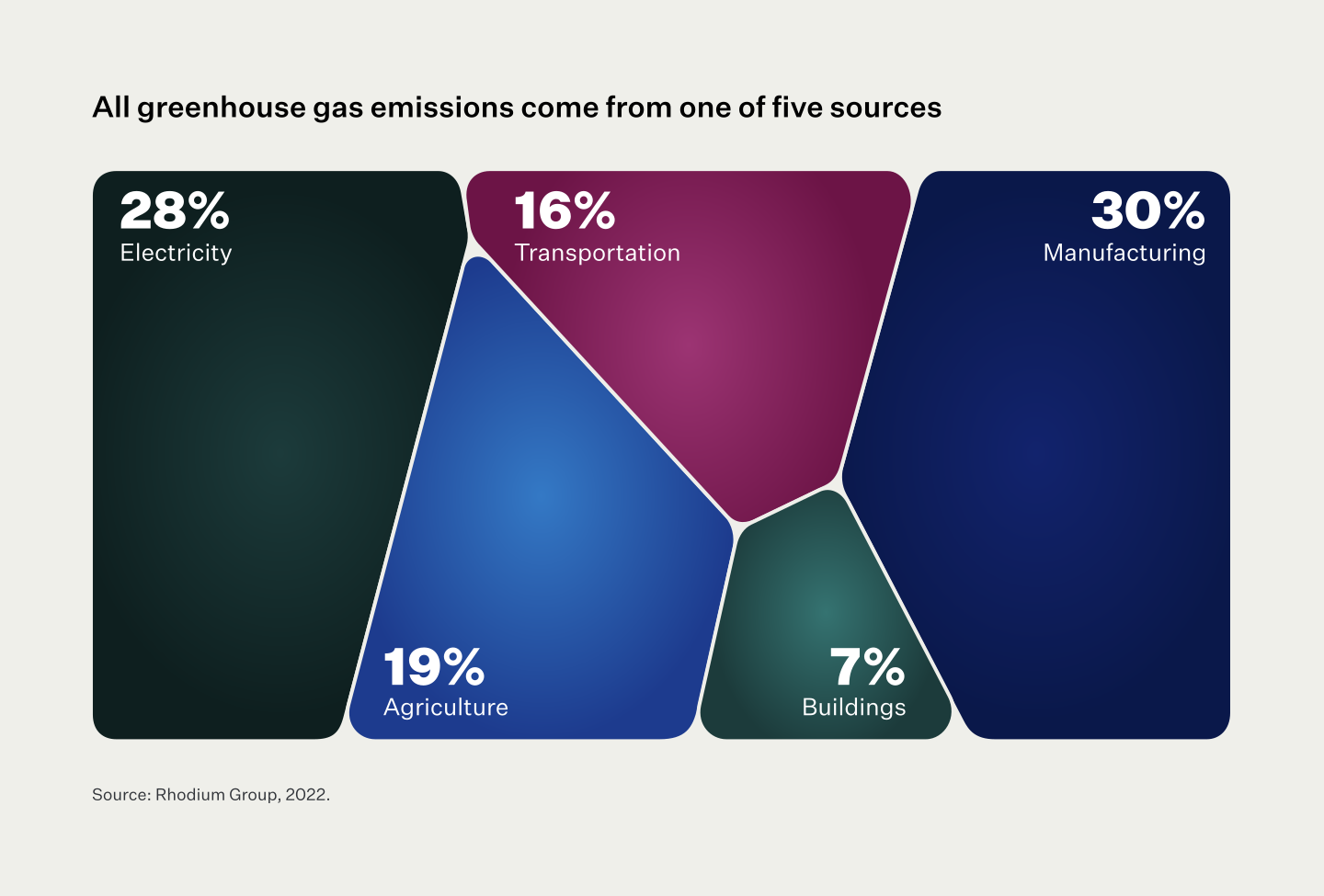
Electricity (28 percent of global emissions)
Making electricity is the second biggest source of emissions, but it’s arguably the most important: To decarbonize the other sectors, we’ll have to electrify a lot of things that currently use fossil fuels. We need more innovation in renewables, transmission, and other ways to generate and store electricity.
- New approaches to wind power can generate more energy using less land, and advances in geothermal mean it’s being tapped in more places around the world. (Examples: Fervo, Baseload Capital, Airloom)
- Companies are pilot-testing highly efficient power lines that can transmit much more electricity than the previous generation of cables. (TS Conductor, VEIR)
- We need to keep reducing the cost of clean energy that’s available around the clock, including new nuclear fission and fusion facilities. More than half of today’s emissions from electricity could only be eliminated using these so-called “firm” sources, but they have a Green Premium of well over 50 percent. I’m hopeful that we can get rid of the Green Premium with fission; a next-generation nuclear power plant is under construction in Wyoming. And fusion, which promises to give us an inexhaustible supply of cheap clean electricity, has moved from science fiction to near-commercial. (TerraPower, Commonwealth Fusion Systems, Type One Energy)
Manufacturing (30 percent of global emissions)
When someone tells you they know how to curb emissions, the first question you should ask is: What’s your plan for cement and steel? They’re key to modern life, and they’re hard to decarbonize on a global scale because it’s so cheap to make them with fossil fuels.
- Zero-emissions steel exists today. It’s made using electricity, so if you can get clean electricity that’s cheap enough, you end up with clean steel that’s cheaper than the conventional type. The technology still needs to get into more markets, and companies that make clean steel need to expand their capacity. (Boston Metal, Electra)
- Clean cement faces similar hurdles. Several companies have found ways to make it with no Green Premium, but it takes years to get a foothold in the global market and ramp up manufacturing capacity. (Brimstone, Ecocem, CarbonCure, Terra CO2, Fortera)
- One of the biggest energy surprises of the past decade is the discovery of geologic hydrogen. Eventually, hydrogen will be widely used to make clean fuels and will help with clean steel and cement. Today we make it from fossil fuels or by running electricity through water, but geologic hydrogen is generated by the Earth itself. Companies have already proven that they can find it underground; now the challenge is to extract it efficiently. There’s also been a lot of progress on making hydrogen with electricity much more cheaply than current technology does it. (Koloma, Mantle8, Electric Hydrogen)
New techniques have made clean steel a reality.

- Companies are beginning to roll out ways to either capture carbon from facilities that currently emit it, such as cement and steel plants, or to remove it directly from the air and store it permanently. If captured carbon becomes cheap enough, we could even use it to make things like sustainable aviation fuel. (Heirloom, Graphyte, MissionZero, Deep Sky)
Agriculture (19 percent of global emissions)
Much of the emissions from agriculture comes from just two sources: the production and use of fertilizer, and grazing livestock that release methane.
- Farmers can already buy one replacement for synthetic fertilizer that’s made without any emissions, and another that turns the methane in manure into organic fertilizer. Both are selling at a negative Green Premium. Now the challenge is to produce them in large quantities and persuade farmers to use them. (Pivot Bio, Windfall Bio)
- Additives to cattle feed that keep livestock from producing methane are nearly cheap enough to be economical for farmers, and a vaccine that does the same thing has been shown to work. It’s now moving into the next stage of development. (Rumin8, ArkeaBio)
- Another source of methane is the cultivation of rice, one of the world’s most important staple foods. Companies are helping rice farmers around the world adopt new methods that both reduce methane emissions and increase crop yields. (Rize)
- One stubborn problem is that some of the nitrogen in fertilizer seeps into the atmosphere as nitrous oxide, a potent greenhouse gas. It’s very dilute, which makes it hard to capture.
Transportation (16 percent of global emissions)
Nearly one in four cars sold in 2024 was an EV, and more than 10 percent of all vehicles in the world are electric. In some countries including the U.S., they still have disadvantages, such as long charging times and too few public charging stations, that keep them from being as practical as gas-powered cars. In addition, cars and trucks are just one part of this sector, which also includes tough-to-decarbonize activities like shipping and aviation.
- Airplane emissions are projected to double by 2050, and clean jet fuel still comes with a Green Premium of over 100 percent. Today we know of only two cost-effective ways to make it: produce it with algae, or make synthetic fuel using very cheap hydrogen. Companies are in the early stages of work on both approaches.
- As more transportation goes electric, the demand for batteries is going to increase, which is why companies have developed ways to make them cheaper and more efficient. (KoBold Metals, GeologicAI, Redwood, Stratus Materials)
Buildings (7 percent of global emissions)
Heating and cooling buildings is the smallest slice of global emissions today, but it’s going to skyrocket with urbanization and the growing need for air conditioning.
- Electric heat pumps are widely available, up to five times more efficient than boilers and furnaces, and often the cheaper option. But there aren’t enough skilled workers around the world to install them. Next-generation, extra-efficient heat pumps are already on the market, and ones that are easier to install are in the works. (Dandelion, Blue Frontier, Conduit Tech)
- Other zero Green Premium products are available, including building sealants and super-efficient windows. But as with so many clean technologies, reaching scale takes time. (Aeroseal, Luxwall)


Top Stories


 Posts
Posts


No comments:
Post a Comment